A Short Experiment With Supply Routes
A short evening session is often the best time to test whether a team really understands simulation supply routes, because there is enough pressure to make choices but not enough…
A short evening session is often the best time to test whether a team really understands simulation supply routes, because there is enough pressure to make choices but not enough time to hide mistakes. Instead of trying to play perfectly, treat the night like a small experiment. Pick one route, one delivery pattern, and one role for each player, then keep everything else as simple as possible. The goal is not to prove that your group is elite. The goal is to see how coordination changes when the route has to survive under ordinary attention, limited time, and a few inevitable errors.
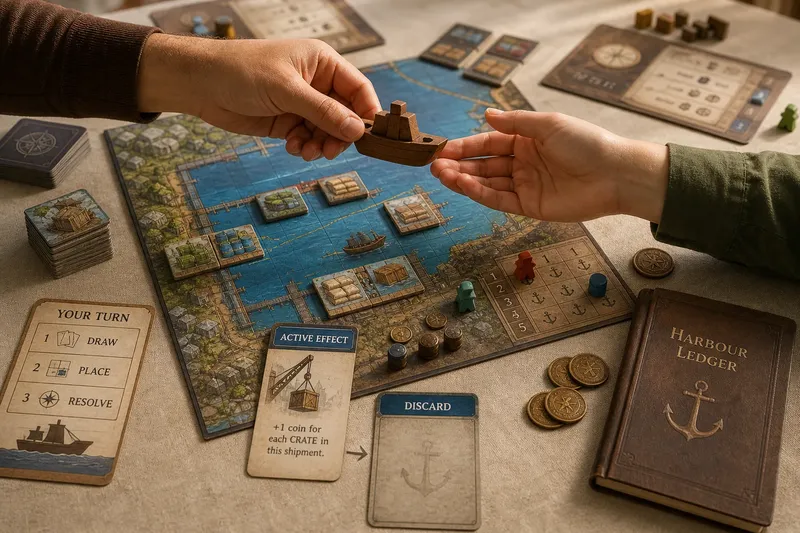
Start by defining the route in plain terms. Where does the shipment begin, where does it need to go, and which points on the map create the most friction? In many simulation games, the answer is not speed alone but timing: loading, transfer, handoff, and recovery all matter. If the group has more than two players, assign one person to watch inventory, one to monitor movement, and one to call out delays. That division prevents everyone from talking at once. If the route breaks down, do not restart immediately. Note which step failed first, because that is the piece coordination must improve.
The experiment works best when you compare two approaches rather than chasing a single perfect one. In the first run, keep the route cautious: fewer handoffs, slower turns, and a clearer chain of responsibility. In the second, allow a more flexible style where players improvise around traffic or obstacles. Compare how often the team hesitates, doubles back, or leaves resources idle. A cautious plan may finish slower but feel calmer; a flexible plan may move faster but create confusion. Neither result is automatically better. What matters is whether the group can explain why one method worked better in that specific session.
Coordination usually fails for ordinary reasons, not dramatic ones. Someone assumes another player already loaded the cargo. Someone sees the marker but not the deadline. Someone moves ahead because the route feels obvious, while another teammate is still waiting for confirmation. To reduce those mistakes, use short, repeatable calls. Say what is ready, what is missing, and what comes next. Avoid long explanations mid-run. If the game supports markers or map pings, use them consistently instead of improvising symbols. The more predictable your communication becomes, the less the route depends on memory and the more it depends on shared attention.
A useful way to judge the session is to look at bottlenecks rather than totals. A completed delivery can still hide weak coordination if the group spent half the time waiting at one checkpoint. Check whether delays came from navigation, loading, decision-making, or simple silence. If you need a reference point for what was discussed during the run, even a placeholder like thapcam can be imagined as the moment everyone agreed on the route before moving again. That kind of mental marker helps players separate planning from execution. The outcome then becomes easier to read because you can see where the plan was clear and where the team drifted.
Evening sessions are short, so avoid overcorrecting after one bad pass. A route that looks messy on the first attempt may still be useful if the mistakes come from unfamiliarity rather than poor structure. Ask two questions after each run: did the team understand the route, and did the route support the team’s style? If the answer to the first is no, simplify the instructions. If the answer to the second is no, change the route itself. This distinction matters because players often blame one another for problems created by layout, timing, or a poor handoff system. Better coordination starts with naming the real source of friction.
Progress is easier to see when you track one small improvement instead of many vague impressions. For example, measure whether the team needs fewer reminders about departure time, whether cargo stays organized longer, or whether the return trip is cleaner than the outbound route. These are practical signals of learning. They also help keep morale steady, because a short session should end with something concrete, not just a feeling. If the group improves one weak point, that counts. If it learns that a certain route style creates avoidable stress, that also counts. A useful experiment does not always end in success; sometimes it ends in a better question.
The strongest sign of coordination is not perfect efficiency but shared adjustment. If one player notices a delay and another changes pace without being told twice, the route is becoming cooperative rather than merely organized. That is especially valuable in simulation games, where supply chains often reward calm adaptation more than rushed optimization. Keep the final run simple and deliberately read the result. Did the team become quieter because the plan was clearer, or quieter because people stopped offering useful input? Did the route feel smoother because everyone understood it, or because one person carried the whole process? Those answers tell you whether the evening improved team play or just masked its weaknesses.
End the session by naming one habit to repeat and one habit to drop. Maybe the team should keep the same callout language, but shorten the route itself. Maybe it should preserve the cautious first run, but replace vague instructions with tighter checkpoints. The point is not to preserve every detail of the experiment. The point is to turn a short evening into a readable lesson about coordination. When players can explain what helped the supply route succeed, they are better prepared for the next map, the next role split, and the next time the game asks them to move resources together instead of alone.